Blogs

Why Hiring a Wedding Planner Matters More Than Décor

Why Hiring a Wedding Planner Matters More Than Décor

When couples start planning a wedding, décor is usually the first thing discussed.
Stages, flowers, lighting, themes — everything that looks good in photos gets priority.

But here’s the truth most couples realize only after the wedding:

A wedding doesn’t fail because of bad décor.
It fails because of poor planning.

Décor is just one visible layer.
Planning is what holds the entire wedding together.


Décor Is What You See. Planning Is What You Experience.

Décor creates the look.
Planning creates the experience.

Guests don’t remember:

  • The exact shade of flowers

  • The number of hanging lights

They remember:

  • Long waiting times

  • Confusing schedules

  • Poor sound

  • Delays and chaos

These problems have nothing to do with décor.
They are planning failures.


What a Wedding Planner Actually Does (Beyond Décor)

Many couples assume a wedding planner’s role is limited to décor coordination.
In reality, décor is only a small part of the planner’s responsibility.

A professional wedding planner manages:

  • Event timelines

  • Vendor coordination

  • Guest flow and movement

  • Family expectations

  • On-ground execution

  • Backup planning

  • Crisis handling

Décor vendors focus on visuals.
Planners focus on everything else that makes the wedding work.


Décor Without Planning Can Still Lead to Chaos

Even the most beautiful décor cannot fix:

  • Delayed ceremonies

  • Sound system failures

  • Overlapping rituals

  • Vendor miscommunication

  • Guests not knowing where to go

This is why many visually stunning weddings still feel stressful and disorganized.

Planning is what ensures:

  • The right thing happens

  • At the right time

  • In the right order

Why Hiring a Wedding Planner Matters More Than Décor

A Wedding Is a Live Event, Not a Photoshoot

A wedding happens in real time.

There are:

  • Hundreds of guests

  • Multiple vendors

  • Emotions running high

  • Zero margin for confusion

Without a planner:

  • Families try to manage logistics

  • Couples get pulled in different directions

  • Small issues become big problems

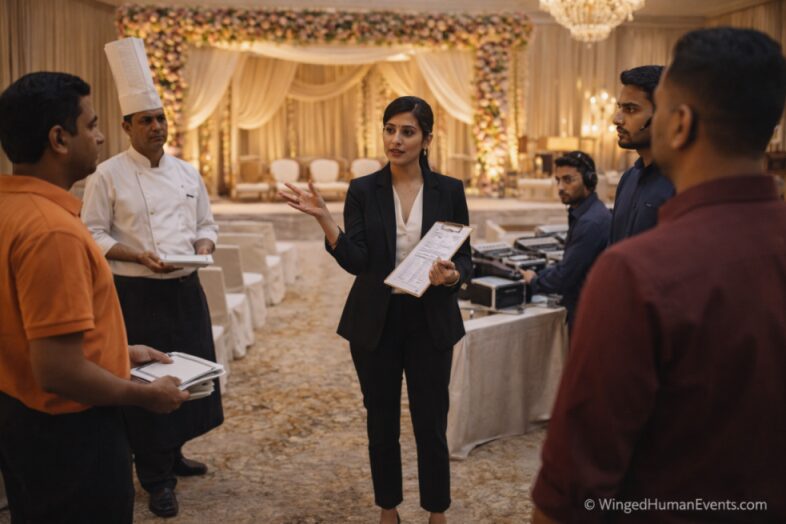
A planner acts as the central control system, so everything moves smoothly without visible effort.
Why Hiring a Wedding Planner Matters More Than Décor

Guest Experience Matters More Than Visual Perfection

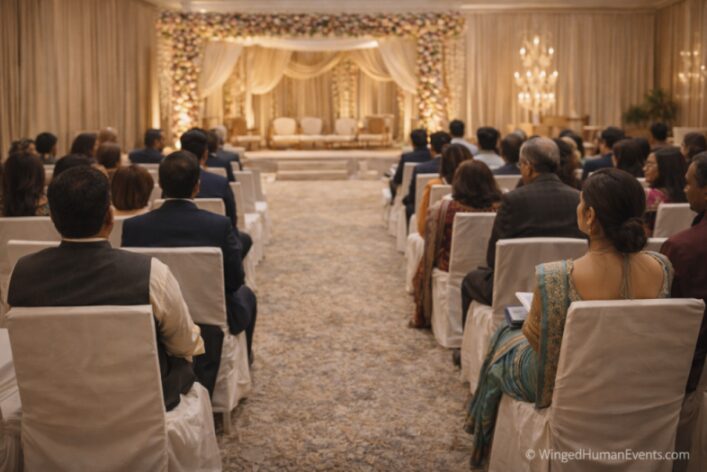
Couples often spend weeks finalizing décor and minutes planning guest comfort.

Guests notice:

  • Seating comfort

  • Clear instructions

  • Smooth transitions

  • Good sound and visibility

  • Reasonable waiting times

These are planning decisions, not decoration choices.

A well-planned wedding feels:

  • Calm

  • Enjoyable

  • Thoughtful

  • Effortless

Even if the décor is simple.


Why Planning Protects Your Wedding Investment

Weddings involve significant spending.

Without proper planning:

  • Vendor time gets wasted

  • Setups get delayed

  • Resources are misused

  • Last-minute fixes increase costs

A planner protects your budget by:

  • Coordinating vendors efficiently

  • Avoiding duplication

  • Reducing delays

  • Preventing last-minute panic spending

Planning ensures your money is used wisely, not just visibly.


Décor Can Be Recreated. A Ruined Experience Cannot.

Photos can be edited.
Décor can be changed.

But:

  • Missed moments

  • Stressed couples

  • Tired guests

  • Disorganized events

These cannot be fixed later.

Planning ensures:

  • You enjoy your wedding

  • Your family enjoys the celebration

  • Guests leave with good memories


Final Thoughts

Décor enhances a wedding.
Planning defines it.

A beautifully decorated wedding without planning can still feel chaotic.
A well-planned wedding with simple décor can feel unforgettable.

That’s why hiring a wedding planner matters far more than décor alone.


A wedding should feel joyful, not stressful.
Professional planning ensures every detail works together — smoothly, quietly, and effortlessly.

Common Wedding Planning Mistakes Couples Make (and How to Avoid Them

Common Wedding Planning Mistakes Couples Make (and How to Avoid Them

Planning a wedding is exciting, emotional, and often overwhelming. In the middle of expectations, traditions, and opinions, many couples make planning mistakes that later turn into stress.

Most of these mistakes are not about budget — they are about planning structure, coordination, and timing.

Here are the most common wedding planning mistakes couples make, and how to avoid them.

1. Starting Wedding Planning Without a Clear Vision

Many couples begin booking venues, decorators, or photographers without deciding what kind of wedding they actually want.

This often leads to confusion later and unnecessary changes.

How to avoid it:
Before making bookings, align clearly on:

  • Wedding size (intimate or large-scale)

  • Style (traditional, modern, or mixed)

  • Number of functions

  • Overall experience you want guests to have

👉 Check our service-  for Wedding planner in Mumbai


2. Not Setting a Realistic Wedding Budget

A common mistake is setting a rough budget without breaking it into categories.

Couples often overspend on visible elements like décor and underestimate:

  • Logistics

  • Production

  • Backup arrangements

  • Coordination costs

How to avoid it:
Create a category-wise budget:

  • Venue & logistics

  • Catering

  • Décor & production

  • Entertainment

  • Event planning & coordination

👉 Read our blog:
“Why Hire a Professional Event Planner” 


3. Booking Vendors at the Wrong Time

Some vendors are booked too late, while others are booked too early without clarity.

This can result in:

  • Limited options

  • Higher costs

  • Vendor mismatch

How to avoid it:
Follow a structured booking order:

  1. Finalize dates and venue

  2. Appoint an event planner

  3. Lock key vendors

  4. Design décor and event flow

👉 Check our:
Event Management Services .

Common Wedding Planning Mistakes Couples Make

4. Focusing Only on Décor, Ignoring Guest Experience

Décor looks good in photos, but guests remember:

  • Waiting time

  • Seating comfort

  • Sound clarity

  • Event flow

Ignoring guest experience is one of the most common wedding planning mistakes.

How to avoid it:
Plan the wedding from a guest’s point of view:

  • Smooth entry and movement

  • Clear timelines

  • Comfortable seating

  • Proper sound and visibility

👉 Wingedhumanevents also offers best stage decoration service in Mumbai.

Common Wedding Planning Mistakes Couples Make

5. Trying to Manage Everything Yourself

Many couples try to coordinate vendors, timelines, and family expectations on their own.

This often leads to stress and missed details.

How to avoid it:
Have a professional event management team handle:

  • Vendor coordination

  • Timelines and schedules

  • On-ground execution

  • Issue resolution


6. Ignoring Backup and Contingency Planning

Weather changes, power issues, and last-minute delays are common in weddings.

Many couples assume everything will go exactly as planned.

How to avoid it:
Always plan backups:

  • Indoor alternatives for outdoor events

  • Power and technical backups

  • Time buffers

  • Emergency coordination plans


7. Poor Event Timeline and Flow Planning

A wedding is a live event, not just a series of rituals.

Without proper flow:

  • Guests get confused

  • Energy drops

  • Delays increase

How to avoid it:
Create a detailed timeline covering:

  • Guest arrival

  • Key rituals

  • Entertainment

  • Breaks and transitions


8. Overloading the Wedding Schedule

Trying to fit too many rituals, performances, and events into limited time often leads to fatigue and delays.

How to avoid it:
Focus on meaningful moments.
Not everything needs to happen on the same day or stage.


Final Thoughts

Most wedding planning mistakes happen because of lack of structure, not lack of effort.

A well-planned wedding ensures:

  • Smooth execution

  • Happy guests

  • Less stress

  • Better memories

Professional planning allows couples to enjoy their own wedding, instead of managing it.

Planning a wedding involves far more than décor and bookings. Having the right planning structure and coordination makes the entire experience smoother and stress-free.

If you’re planning a wedding and want expert guidance that goes beyond décor and visuals, working with a professional event management team can make all the difference.

Wedding vs Corporate vs Celebrity Events: Planning Differences You Must Understand

Wedding vs Corporate vs Celebrity Events: Planning Differences You Must Understand

event planners in mumbai

At a distance, all large events may look similar—venues, lights, stages, guests, logistics.
But behind the scenes, wedding events, corporate events, and celebrity events operate on completely different planning logic.

Treating them the same is one of the biggest reasons events fail.

At WingedHuman Events, we’ve planned and executed weddings, corporate conferences, leadership summits, brand launches, and celebrity-driven events across Mumbai and beyond. And one truth becomes clear very quickly:

Each event type demands a different mindset, team structure, and risk management approach.

This article breaks down those differences clearly—so you understand what really goes into planning each kind of event.

1. Wedding Events: Emotion-First, Experience-Driven Planning

What Drives Wedding Planning?

Weddings are emotion-led events.

Decisions are influenced by:

  • Family expectations

  • Cultural traditions

  • Aesthetic preferences

  • Personal milestones

  • Social perception

Success is measured emotionally:

“Did it feel special?”
“Did the family feel proud?”
“Will people remember this day?”

Key Planning Characteristics

High personalization

  • Custom décor

  • Ritual-specific timelines

  • Family-led approvals

Multiple stakeholders

  • Bride & groom

  • Parents on both sides

  • Relatives with opinions

  • Priests, artists, vendors

Flexible timelines

  • Emotional moments often override rigid schedules

  • Adjustments are common and expected

Visual excellence over operational complexity

  • Aesthetics matter deeply

  • Flow matters, but perfection is emotional, not technical

Core Planning Challenges

  • Managing expectations across families

  • Balancing emotion with execution discipline

  • Handling last-minute changes gracefully

  • Ensuring cultural sensitivity at every step

Wedding planning is art + patience + coordination.


2. Corporate Events: Precision, Control, and Business Outcomes

Corporate events operate on a completely different axis.

There is far less emotion—and far more accountability.

What Drives Corporate Event Planning?

Corporate events are outcome-driven.

Success is measured by:

  • Timelines being respected

  • Speakers staying on schedule

  • Technology functioning flawlessly

  • Brand reputation being protected

  • Zero embarrassment for leadership

In corporate events, “almost perfect” is not acceptable.

Key Planning Characteristics

Structure over flexibility

  • Fixed agendas

  • Strict session timings

  • Defined escalation protocols

Fewer decision-makers, higher stakes

  • CXOs, leadership teams, brand managers

  • One mistake reflects on the company publicly

Heavy reliance on systems

  • AV, LED walls, live streaming

  • Access control and registrations

  • Vendor coordination with backups

Risk planning is mandatory

  • Power failures

  • Speaker delays

  • Internet or tech issues

  • Crowd movement and safety

Core Planning Challenges

  • Managing large volumes (50 to 5,000+ guests)

  • Ensuring seamless transitions between sessions

  • Maintaining brand tone and professionalism

  • Planning contingencies for everything

Corporate event planning is engineering, not decoration.


3. Celebrity Events: Security, Confidentiality, and Zero-Error Execution

Celebrity events introduce a third, far more sensitive layer.

Here, even small mistakes can become public news.

What Drives Celebrity Event Planning?

Celebrity events are driven by:

  • Security

  • Reputation management

  • Timing precision

  • Controlled exposure

Success is measured by one thing:

Nothing goes wrong. Publicly or privately.

Key Planning Characteristics

Security-first planning

  • Controlled entry and exit points

  • Restricted movement zones

  • Privacy buffers

  • Coordination with personal security teams

Tight timelines

  • Celebrities often arrive and leave within minutes

  • Delays are unacceptable

Limited access

  • Crew size is tightly controlled

  • Information is shared on a need-to-know basis

Media and optics awareness

  • Camera angles

  • Sightlines

  • Lighting decisions

  • Crowd placement

Core Planning Challenges

  • Coordinating multiple agencies discreetly

  • Maintaining confidentiality at all times

  • Preparing for unpredictable schedules

  • Ensuring compliance without chaos

Celebrity events require discipline, discretion, and experience under pressure.


precision.

4. Why One Planner Can’t Treat All Events the Same

This is where many event companies fail.

A planner who is excellent at weddings may struggle with:

  • Corporate hierarchies

  • Technical complexity

  • Risk escalation protocols

A corporate-focused planner may struggle with:

  • Emotional family dynamics

  • Cultural nuances

  • Fluid decision-making

A celebrity event requires:

  • Experience under scrutiny

  • Calm decision-making

  • Absolute professionalism

👉 Event type matters more than event size.


5. How WingedHuman Events Approaches Different Event Types

At WingedHuman Events, we do not run all events through the same process.

Our Planning Philosophy

  • Weddings: Emotion-aware, family-sensitive, experience-led

  • Corporate Events: Process-driven, timeline-locked, risk-managed

  • Celebrity Events: Security-first, discreet, precision-controlled

Each event category has:

  • A different planning framework

  • A different vendor selection logic

  • A different approval and escalation system

  • A different on-ground command structure

That’s how complexity stays controlled.


6. Choosing the Right Event Planner: What You Should Ask

Before hiring any event planner, ask:

  • Have you handled this exact type of event before?

  • Can you show experience with similar scale and stakes?

  • How do you handle unexpected failures?

  • Who makes decisions on-ground during the event?

  • What happens if something goes wrong?

The answers will tell you everything.


Final Thought: Events Don’t Fail Because of Décor. They Fail Because of Planning Gaps.

Beautiful décor can hide small mistakes.
But poor planning always shows—eventually.

Whether it’s a wedding, a corporate conference, or a celebrity-led event, the difference lies in how deeply the planner understands the nature of the event itself.

At WingedHuman Events, we plan with clarity, execute with discipline, and respect the purpose behind every event.


Planning a Large-Scale Event in Mumbai?

If you’re evaluating:

👉 Talk to our senior planning team
👉 Get a strategy-first consultation
👉 Understand what your event really requires

WingedHuman Events
Where planning depth meets execution

Corporate Event Planning in Mumbai: From 50 to 5,000 Guests

Corporate Event Planning in Mumbai: From 50 to 5,000 Guests

Mumbai is where business moves fast—and corporate events here move even faster.

From boardroom-level strategy meets and leadership offsites to large-scale conferences, product launches, annual days, and dealer meets, corporate events in Mumbai are no longer just gatherings. They are business tools—used to communicate vision, build culture, strengthen relationships, and project brand credibility.

Planning such events, especially at scale, is a discipline of its own.

This guide breaks down how corporate event planning works in Mumbai across different scales, what changes as guest counts grow, and what businesses must consider to execute flawless events—whether for 50 people or 5,000.

corporate event planning in mumbai

Why Corporate Events in Mumbai Demand a Different Level of Planning

Mumbai presents a unique mix of opportunities and constraints:

  • High-profile venues

  • Dense traffic and logistics challenges

  • Diverse audience profiles

  • Tight schedules and zero tolerance for delays

  • High brand visibility and expectations

A corporate event here is rarely “just an event.”
It’s often a public reflection of leadership, planning ability, and operational maturity.

This is why experienced corporate event planners approach Mumbai events with precision, contingencies, and scale-specific planning frameworks.


Corporate Events for 50–150 Guests: Precision Over Scale

Smaller corporate events are often the most strategic—and the most underestimated.

Common Formats

  • Leadership offsites

  • Strategy meetings

  • Investor or board meetings

  • CXO networking dinners

  • Senior management town halls

What Matters Most at This Scale

  • Venue acoustics and privacy

  • Seating comfort and sightlines

  • Discreet yet premium service

  • Smooth agenda flow

  • Zero disruption

Here, the focus is not spectacle—it’s control and clarity.

A good event planner ensures:

  • No background noise

  • Perfect AV setup for discussions

  • Seamless transitions between sessions

  • Backup plans for power, tech, and timing

In Mumbai, venues like five-star hotels, business lounges, and private convention spaces are commonly used for this segment.

Corporate Events for 150–500 Guests: Experience Meets Structure

This is where complexity begins to scale.

Common Formats

  • Annual general meetings

  • Product launches

  • Dealer meets

  • Employee engagement events

  • Corporate conferences

New Planning Layers Introduced

  • Registration and check-in systems

  • Audience flow management

  • Larger AV and stage setups

  • Multi-vendor coordination

  • Structured guest experience design

At this level, planning becomes operational, not just creative.

A professional corporate event planner will:

  • Map guest movement minute-by-minute

  • Design seating layouts based on sightlines

  • Align stage, screen, lighting, and audio perfectly

  • Coordinate rehearsals and dry runs

  • Build redundancy into every critical system

Mumbai venues for this range include:

  • Mid-to-large convention halls

  • Hotel ballrooms

  • Corporate auditoriums


Corporate Events for 500–1,500 Guests: Logistics Take Center Stage

Once guest counts cross 500, the event becomes a logistics-first operation.

Common Formats

  • Large conferences

  • Annual days

  • Brand conventions

  • Multi-city leadership summits

  • Industry expos

Critical Planning Challenges

  • Crowd control and movement

  • Parking and transport coordination

  • Multiple entry and exit points

  • Emergency preparedness

  • Technical reliability at scale

At this size, even a small delay can ripple into a major disruption.

Professional planners focus heavily on:

  • Zonal layouts (stage zone, seating zone, networking zone)

  • Dedicated control rooms

  • Real-time coordination via headsets and command teams

  • Backup AV, lighting, and power systems

  • Medical and safety protocols

Mumbai’s infrastructure demands deep local experience to manage such events without friction.

corporate event planning in mumbai-

Corporate Events for 1,500–5,000 Guests: Engineering an Ecosystem

At this scale, corporate event planning becomes event engineering.

Common Formats

  • Mega annual days

  • Large public product launches

  • Industry-wide conferences

  • Multi-day summits

  • Employee celebrations for large enterprises

What Changes Completely

  • Planning timelines stretch into months

  • Multiple teams operate in parallel

  • Permissions, compliance, and safety become critical

  • Every decision affects thousands of people

Key Focus Areas

  • Venue capacity and load management

  • Emergency evacuation planning

  • Power redundancy and backup generators

  • Multi-layer security

  • Structured communication protocols

Here, the role of an event planner is closer to that of a project director, coordinating dozens of vendors, hundreds of crew members, and thousands of attendees—without visible chaos.

Mumbai venues for this scale include:

  • Large convention centers

  • Exhibition grounds

  • Stadium-adjacent spaces

  • Custom-built event structures


What Stays Constant Across All Scales

No matter the size, successful corporate events in Mumbai share a few non-negotiables:

1. Planning Depth

Every minute, movement, and interaction is pre-planned.

2. Contingency Thinking

Rain, power issues, traffic delays—everything has a Plan B.

3. Professional Coordination

Clear hierarchies, defined responsibilities, and real-time communication.

4. Brand Alignment

The event must reflect the company’s culture, tone, and positioning.

5. Calm Execution

A great event feels effortless—even when the backend is complex.


Choosing the Right Corporate Event Planner in Mumbai

When planning corporate events at any scale, especially above 150 guests, businesses should look beyond décor and visuals.

Key questions to ask:

  • Have they handled events of similar scale?

  • Do they manage logistics and risk, not just design?

  • How strong is their on-ground coordination team?

  • Do they build backups into planning?

  • Can they handle pressure calmly?

The right planner doesn’t just execute—they anticipate.


Why Experience Matters More Than Ever

In Mumbai’s fast-paced corporate environment, events are often tied to:

  • Investor confidence

  • Employee morale

  • Brand perception

  • Strategic announcements

A poorly executed event can undo months of planning.
A well-executed one can elevate trust instantly.

This is why companies increasingly partner with experienced, full-stack corporate event planners who understand scale, systems, and stakeholder expectations—not just aesthetics.


Final Thoughts

Corporate event planning in Mumbai is no longer about “managing an event.”
It’s about orchestrating a complex experience—whether for 50 leaders or 5,000 employees.

The scale may change, but the expectations never drop.

With the right planning approach, professional execution, and experienced partners, corporate events can move from being logistical challenges to becoming powerful business assets.

How to Choose the Right Event Planner for Large-Scale Events

How to Choose the Right Event Planner for Large-Scale Events

A Practical Guide for Corporates, Families & Institutions

how-to-choose-right-event-planner.

Planning a large-scale event is very different from hosting a small gathering or celebration.

When the guest list runs into the hundreds (or thousands), and the stakes involve brand image, reputation, safety, logistics, and coordination, choosing the right event planner becomes one of the most critical decisions you’ll make.

In cities like Mumbai—where venues, vendors, permissions, traffic, and timelines can quickly become complex—this decision matters even more.

This guide is written to help you choose an event planner for large-scale events with clarity, confidence, and practical insight—whether you’re planning a corporate conference, a luxury wedding, a product launch, or a high-profile public event.


What Qualifies as a Large-Scale Event?

Before choosing an event planner, it’s important to define what “large-scale” actually means.

A large-scale event typically includes one or more of the following:

  • 200+ guests

  • Multiple vendors and teams working simultaneously

  • Large venues (banquet halls, convention centers, outdoor grounds)

  • Complex logistics (AV, stage, lighting, power, permissions)

  • Tight timelines and fixed delivery windows

  • High visibility (corporate, media, celebrity, public-facing events)

Examples include:

  • Corporate conferences and offsites

  • Product launches and brand activations

  • Destination or luxury weddings

  • Award nights and gala dinners

  • Government, institutional, or public events

For such events, experience and systems matter far more than creativity alone.


Why Choosing the Right Event Planner Matters at Scale

At a large scale, event planning is not just about décor or aesthetics.

It’s about:

  • Risk management

  • Process control

  • Vendor coordination

  • Contingency planning

  • On-ground execution discipline

A wrong choice can lead to:

  • Delays and last-minute chaos

  • Budget overruns

  • Vendor misalignment

  • Guest discomfort

  • Reputation damage

A good planner, on the other hand, makes the event feel effortless, even though hundreds of moving parts are working behind the scenes.


Step 1: Look Beyond “Pretty Events” — Evaluate Scale Experience

Many planners showcase beautiful photos on social media—but that alone doesn’t indicate their ability to manage large events.

When evaluating an event planner, ask:

  • Have they handled events of similar guest size?

  • Have they worked in venues comparable to yours?

  • Have they managed multiple teams simultaneously?

An event planner who has managed:

  • 500+ guest weddings

  • Multi-day conferences

  • Events with complex stage and AV setups

…is better equipped to handle pressure than someone who has only done smaller, intimate gatherings.

👉 Tip: Ask for case studies, not just photos.


Step 2: Assess Their Planning Process (Not Just Ideas)

Large-scale events require structure, not improvisation.

A professional event planner should be able to clearly explain:

  • Their planning timeline

  • Milestone-based execution

  • Vendor onboarding process

  • On-ground coordination strategy

  • Backup plans for delays, weather, or technical issues

If the planner relies only on verbal promises or vague explanations, that’s a red flag.

What you should hear instead:

  • Clear planning phases

  • Defined responsibilities

  • Checklists and workflows

  • Structured coordination

At scale, process beats passion.


Step 3: Understand Their Vendor Network & Control

Large events depend heavily on vendors:

  • Decor

  • AV & lighting

  • Stage & fabrication

  • Catering

  • Security

  • Logistics

Ask:

  • Do they work with trusted, repeat vendors?

  • Do they have backup vendors?

  • Who controls vendor coordination—you or them?

A strong planner doesn’t just “suggest” vendors.
They manage them.

This ensures:

  • Quality consistency

  • Accountability

  • Faster issue resolution

event-cordination-in-action-at-venue.

Step 4: Check Their On-Ground Team Strength

Large events don’t run on one person.

Ask:

  • How many team members will be present on event day?

  • Who handles what—operations, guest management, vendors, stage?

  • Is there a single point of accountability?

A good large-scale event planner deploys:

  • Supervisors

  • Coordinators

  • Technical leads

So that the event doesn’t collapse if one person is unavailable.


Step 5: Transparency in Budget & Cost Control

Large events come with large budgets—and without control, costs can spiral.

The right planner will:

  • Break down costs clearly

  • Explain where money is being spent

  • Suggest optimizations without cutting corners

  • Avoid last-minute “surprise” expenses

Be cautious of planners who:

  • Avoid giving detailed estimates

  • Push vague “package pricing” for large events

  • Are unclear about revision policies

Transparency is a sign of maturity and professionalism.


Step 6: Evaluate Communication & Decision-Making Style

Large-scale events involve frequent decisions under time pressure.

You need a planner who:

  • Communicates clearly

  • Escalates issues early

  • Offers solutions, not panic

  • Is comfortable saying “no” when something is impractical

During early conversations, observe:

  • How they respond to constraints

  • Whether they listen before proposing ideas

  • If they ask the right questions

Good planners don’t just execute—they think with you.


Step 7: Understand Their Risk & Contingency Planning

This is one of the most overlooked areas.

Ask directly:

  • What happens if a vendor doesn’t show up?

  • What if weather disrupts the event?

  • What if the venue faces a technical issue?

Experienced planners always have:

  • Backup vendors

  • Alternate layouts

  • Emergency protocols

If the answer is “we’ll manage,” push for specifics.


Step 8: Alignment With Event Type & Audience

Not every planner is right for every event.

Some planners excel at:

  • Corporate events

  • Others at weddings

  • Others at celebrity or public events

Choose someone who understands:

  • Your audience

  • Your event tone

  • Your brand or family values

For example:

  • A corporate conference needs precision and punctuality

  • A luxury wedding needs emotional sensitivity and detail

  • A public event needs crowd and safety management

Step 9: Local Expertise Matters (Especially in Mumbai)

Mumbai events come with unique challenges:

  • Traffic and logistics

  • Venue permissions

  • Noise regulations

  • Time constraints

A planner with strong local experience:

  • Knows venue teams

  • Understands municipal requirements

  • Plans realistically

This local knowledge often prevents costly mistakes.


When to Consider a Full-Service Event Planning Company

If your event involves:

  • Multiple days

  • Multiple venues

  • Large guest count

  • Brand or reputational stakes

…it’s better to work with a full-service event planning company rather than individual freelancers or fragmented vendors.

Full-service planners handle:

  • Concept → planning → execution → wrap-up

  • Coordination across all departments

  • Accountability from start to finish


Final Thoughts: Choose Calm Over Chaos

The best large-scale events don’t feel “grand” because they are loud or overwhelming.

They feel grand because:

  • Everything runs on time

  • Guests feel comfortable

  • The host is stress-free

  • Execution feels seamless

Choosing the right event planner is about choosing calm, control, and confidence.

If you’re planning a large-scale event in Mumbai and want a planning partner who understands scale, structure, and execution, explore experienced teams that specialize in managing complexity—not just décor.

For large-format corporate, wedding, and premium events, you can also explore our work at
WingedHumanEvents.com, where we focus on structured, high-impact event execution across Mumbai and beyond.

Ultimate Guide to Event Planners in Mumbai (2026)

Ultimate Guide to Event Planners in Mumbai (2026)

Ultimate Guide to Event Planners in Mumbai

Planning an event in Mumbai is exciting—but it can also get overwhelming very quickly.

From venues and décor to permissions, vendors, guest flow, and last-minute surprises, events in Mumbai demand local expertise, precision, and experience. That’s exactly why event planners are no longer a “luxury”—they’re a necessity in 2026.

This guide is written to help you understand:

  • What event planners in Mumbai actually do

  • How to choose the right one

  • What it realistically costs

  • What trends matter in 2026

  • And how a professional planner can save you time, money, and stress

Whether you’re planning a wedding, birthday, corporate event, or private celebration, this guide will help you make informed decisions.


Why Event Planners Matter More Than Ever in Mumbai

Mumbai isn’t just another city—it’s a high-pressure, fast-moving environment.

Here’s what makes event planning in Mumbai uniquely challenging:

  • Limited venue availability

  • Strict society & venue rules

  • Traffic and logistics complexity

  • Noise, timing, and permission restrictions

  • Vendor coordination across multiple locations

A professional event planner doesn’t just “arrange things.”
They anticipate problems before you even see them.

In 2026, good event planners are expected to:

  • Manage end-to-end execution

  • Offer creative concepts, not templates

  • Work with realistic budgets

  • Handle guests, vendors, and timelines seamlessly

event planners in mumbai

What Does an Event Planners in Mumbai Actually Do?

Many people assume event planners only handle décor. That’s just one small part.

A professional event planner typically handles:

1. Concept & Theme Development

  • Understanding your occasion, audience, and budget

  • Creating a theme that fits your personality and space

  • Ensuring the concept is practical—not just visually appealing

2. Venue Shortlisting & Coordination

  • Recommending venues based on capacity, vibe, and rules

  • Coordinating with venue teams

  • Managing timings, entry points, and layouts

3. Vendor Management

  • Décor, lighting, sound, furniture

  • Photographers and videographers

  • Entertainment and activity vendors

  • Coordinating multiple vendors on the same timeline

4. Budget Planning & Cost Control

  • Helping you allocate budget where it matters

  • Avoiding unnecessary spends

  • Negotiating with vendors when possible

5. On-Ground Execution

  • Supervising setup and teardown

  • Managing event flow

  • Troubleshooting live issues without bothering you

A good planner lets you enjoy your own event instead of running around.


Types of Event Planners in Mumbai (2026)

Not all planners are the same. Choosing the right type matters.

Wedding Event Planners

  • Handle multiple functions across days

  • Focus on décor, guest experience, rituals, and timelines

  • Work closely with families

Birthday & Private Party Planners

  • Adult birthdays, milestone celebrations, anniversaries

  • Focus on themes, venues, entertainment, and guest comfort

Corporate Event Planners

  • Product launches, conferences, team outings

  • Emphasis on professionalism, branding, and punctuality

Boutique & Premium Event Planners

  • Smaller, curated events

  • High attention to detail

  • Personalised experiences over mass production

WingedHuman Events operates strongly in this premium, personalised space, where every event feels intentional.

Not every celebration needs a ballroom or a convention hall. For small group parties, ladies-only gatherings, birthdays, and curated villa celebrations, our premium brand Swanky Parties focuses on intimate, comfortable, and beautifully managed experiences across Mumbai and its outskirts

How to Choose the Right Event Planners in Mumbai

This is where most people go wrong.

Here’s what you should actually look for:

1. Experience With Similar Events

Ask:

  • Have you done events of this size before?

  • Have you worked in this area or venue?

2. Transparency in Communication

Good planners:

  • Explain costs clearly

  • Don’t overpromise

  • Are upfront about limitations

3. Customisation, Not Copy-Paste

Avoid planners who:

  • Show the same décor pictures to everyone

  • Push fixed packages without understanding your needs

4. On-Ground Team Strength

Ask:

  • Who will be present during the event?

  • Is there a dedicated coordinator?

5. Reviews & Real Work

Look for:

  • Real client feedback

  • Actual event photos—not stock images


How Much Does an Event Planner Cost in Mumbai (2026)?

Pricing varies widely based on scale and expectations.

Typical Cost Ranges (Indicative)

  • Small private events: ₹50,000 – ₹1.5 lakhs

  • Mid-scale birthdays / anniversaries: ₹1.5 – ₹4 lakhs

  • Weddings & large events: ₹5 lakhs and above

Factors affecting cost:

  • Number of guests

  • Venue type

  • Décor complexity

  • Duration of the event

  • Vendor count

A good planner helps you get value, not inflate costs.


Event Planning Trends in Mumbai for 2026

Here’s what’s shaping events this year:

Smaller, Curated Gatherings

People prefer:

  • Intimate guest lists

  • Better interaction

  • Comfortable venues

Experience Over Excess

Less focus on:

  • Overdone décor
    More focus on:

  • Guest flow

  • Comfort

  • Thoughtful experiences

Premium Home & Private Venue Events

  • Villas, apartments, private halls

  • Controlled environments

  • Better sound & timing flexibility

Sustainable & Practical Décor

  • Reusable elements

  • Minimal waste

  • Clean aesthetics


Common Mistakes People Make While Hiring Event Planners in Mumbai

Avoid these mistakes:

  • Choosing only based on lowest price

  • Not checking on-ground presence

  • Assuming “Instagram décor = good execution”

  • Not discussing contingency plans

  • Booking too late

An event planner should reduce stress—not add to it.


Why Many Clients Prefer Boutique Event Planners

Boutique planners like WingedHuman Events offer:

  • Direct communication

  • Better accountability

  • Personal involvement

  • Tailored event experiences

You’re not just another booking—you’re a project they care about.


When Should You Hire an Event Planners in Mumbai?

Ideal timelines:

  • Small events: 3–4 weeks in advance

  • Mid-scale events: 1–2 months

  • Weddings: 6–12 months

Earlier planning means:

  • Better venue options

  • Better vendor availability

  • Lower last-minute costs


Final Thoughts: Is Hiring an Event Planner Worth It?

If you value:

  • Peace of mind

  • Professional execution

  • Enjoying your own celebration

Then yes—a good event planner is absolutely worth it.

In a city like Mumbai, planning alone often costs more in stress, time, and mistakes than hiring the right professional.


Planning an Event in Mumbai?

If you’re looking for thoughtfully planned, premium, well-executed events, WingedHuman Events brings creativity, structure, and calm execution together.Planning a large scale event? Read our blog- How to choose the right event planner for large scle events.

👉 Get in touch with our team to discuss your event idea and see how we can bring it to life—beautifully and stress-free.