
How to Choose the Right Event Planner for Large-Scale Events
A Practical Guide for Corporates, Families & Institutions
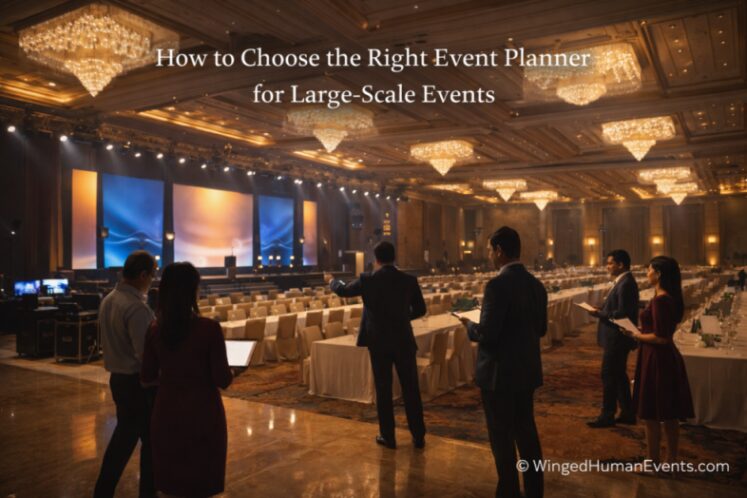
Planning a large-scale event is very different from hosting a small gathering or celebration.
When the guest list runs into the hundreds (or thousands), and the stakes involve brand image, reputation, safety, logistics, and coordination, choosing the right event planner becomes one of the most critical decisions you’ll make.
In cities like Mumbai—where venues, vendors, permissions, traffic, and timelines can quickly become complex—this decision matters even more.
This guide is written to help you choose an event planner for large-scale events with clarity, confidence, and practical insight—whether you’re planning a corporate conference, a luxury wedding, a product launch, or a high-profile public event.
What Qualifies as a Large-Scale Event?
Before choosing an event planner, it’s important to define what “large-scale” actually means.
A large-scale event typically includes one or more of the following:
200+ guests
Multiple vendors and teams working simultaneously
Large venues (banquet halls, convention centers, outdoor grounds)
Complex logistics (AV, stage, lighting, power, permissions)
Tight timelines and fixed delivery windows
High visibility (corporate, media, celebrity, public-facing events)
Examples include:
Corporate conferences and offsites
Product launches and brand activations
Destination or luxury weddings
Award nights and gala dinners
Government, institutional, or public events
For such events, experience and systems matter far more than creativity alone.
Why Choosing the Right Event Planner Matters at Scale
At a large scale, event planning is not just about décor or aesthetics.
It’s about:
Risk management
Process control
Vendor coordination
Contingency planning
On-ground execution discipline
A wrong choice can lead to:
Delays and last-minute chaos
Budget overruns
Vendor misalignment
Guest discomfort
Reputation damage
A good planner, on the other hand, makes the event feel effortless, even though hundreds of moving parts are working behind the scenes.
Step 1: Look Beyond “Pretty Events” — Evaluate Scale Experience
Many planners showcase beautiful photos on social media—but that alone doesn’t indicate their ability to manage large events.
When evaluating an event planner, ask:
Have they handled events of similar guest size?
Have they worked in venues comparable to yours?
Have they managed multiple teams simultaneously?
An event planner who has managed:
500+ guest weddings
Multi-day conferences
Events with complex stage and AV setups
…is better equipped to handle pressure than someone who has only done smaller, intimate gatherings.
👉 Tip: Ask for case studies, not just photos.
Step 2: Assess Their Planning Process (Not Just Ideas)
Large-scale events require structure, not improvisation.
A professional event planner should be able to clearly explain:
Their planning timeline
Milestone-based execution
Vendor onboarding process
On-ground coordination strategy
Backup plans for delays, weather, or technical issues
If the planner relies only on verbal promises or vague explanations, that’s a red flag.
What you should hear instead:
Clear planning phases
Defined responsibilities
Checklists and workflows
Structured coordination
At scale, process beats passion.
Step 3: Understand Their Vendor Network & Control
Large events depend heavily on vendors:
Decor
AV & lighting
Stage & fabrication
Catering
Security
Logistics
Ask:
Do they work with trusted, repeat vendors?
Do they have backup vendors?
Who controls vendor coordination—you or them?
A strong planner doesn’t just “suggest” vendors.
They manage them.
This ensures:
Quality consistency
Accountability
Faster issue resolution
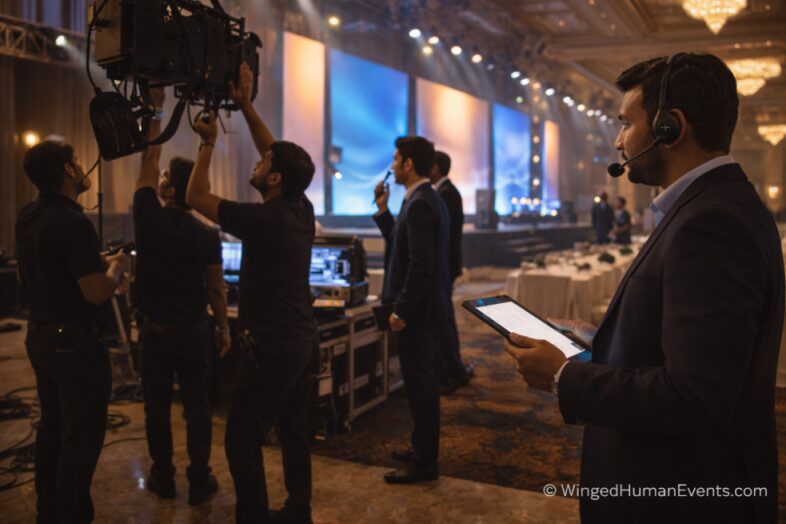
Step 4: Check Their On-Ground Team Strength
Large events don’t run on one person.
Ask:
How many team members will be present on event day?
Who handles what—operations, guest management, vendors, stage?
Is there a single point of accountability?
A good large-scale event planner deploys:
Supervisors
Coordinators
Technical leads
So that the event doesn’t collapse if one person is unavailable.
Step 5: Transparency in Budget & Cost Control
Large events come with large budgets—and without control, costs can spiral.
The right planner will:
Break down costs clearly
Explain where money is being spent
Suggest optimizations without cutting corners
Avoid last-minute “surprise” expenses
Be cautious of planners who:
Avoid giving detailed estimates
Push vague “package pricing” for large events
Are unclear about revision policies
Transparency is a sign of maturity and professionalism.
Step 6: Evaluate Communication & Decision-Making Style
Large-scale events involve frequent decisions under time pressure.
You need a planner who:
Communicates clearly
Escalates issues early
Offers solutions, not panic
Is comfortable saying “no” when something is impractical
During early conversations, observe:
How they respond to constraints
Whether they listen before proposing ideas
If they ask the right questions
Good planners don’t just execute—they think with you.
Step 7: Understand Their Risk & Contingency Planning
This is one of the most overlooked areas.
Ask directly:
What happens if a vendor doesn’t show up?
What if weather disrupts the event?
What if the venue faces a technical issue?
Experienced planners always have:
Backup vendors
Alternate layouts
Emergency protocols
If the answer is “we’ll manage,” push for specifics.
Step 8: Alignment With Event Type & Audience
Not every planner is right for every event.
Some planners excel at:
Corporate events
Others at weddings
Others at celebrity or public events
Choose someone who understands:
Your audience
Your event tone
Your brand or family values
For example:
A corporate conference needs precision and punctuality
A luxury wedding needs emotional sensitivity and detail
A public event needs crowd and safety management
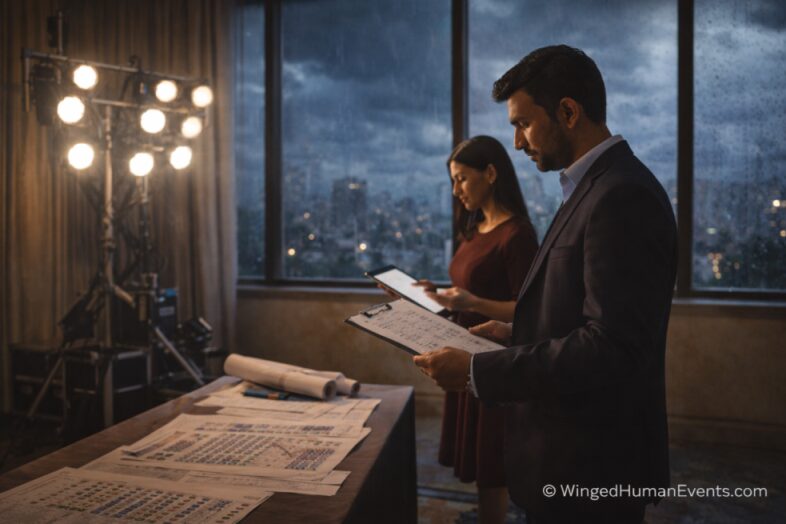
Step 9: Local Expertise Matters (Especially in Mumbai)
Mumbai events come with unique challenges:
Traffic and logistics
Venue permissions
Noise regulations
Time constraints
A planner with strong local experience:
Knows venue teams
Understands municipal requirements
Plans realistically
This local knowledge often prevents costly mistakes.
When to Consider a Full-Service Event Planning Company
If your event involves:
Multiple days
Multiple venues
Large guest count
Brand or reputational stakes
…it’s better to work with a full-service event planning company rather than individual freelancers or fragmented vendors.
Full-service planners handle:
Concept → planning → execution → wrap-up
Coordination across all departments
Accountability from start to finish
Final Thoughts: Choose Calm Over Chaos
The best large-scale events don’t feel “grand” because they are loud or overwhelming.
They feel grand because:
Everything runs on time
Guests feel comfortable
The host is stress-free
Execution feels seamless
Choosing the right event planner is about choosing calm, control, and confidence.
If you’re planning a large-scale event in Mumbai and want a planning partner who understands scale, structure, and execution, explore experienced teams that specialize in managing complexity—not just décor.
For large-format corporate, wedding, and premium events, you can also explore our work at
WingedHumanEvents.com, where we focus on structured, high-impact event execution across Mumbai and beyond.